
Your Trusted Partner in Power & Technology
Go Green Today For a Bright Future

Solar Power Systems & Engineering Solutions

Turnkey On-Grid, Off-Grid & Hybrid Solar EPC for Industrial, Commercial & Residential Facilities in Bangladesh

"WE CAN CREATE A MORE SUSTAINABLE, CLEANER AND SAFER WORLD BY MAKING WISER ENERGY CHOICES"

VOLTCORE Engineering Solutions actively works to promote renewable energy across Bangladesh. Backed by our expert engineering group and strategic planning, we deliver alternative clean energy solutions to overcome power shortages, specially tailored for residential, commercial, industrial, and agricultural sectors.

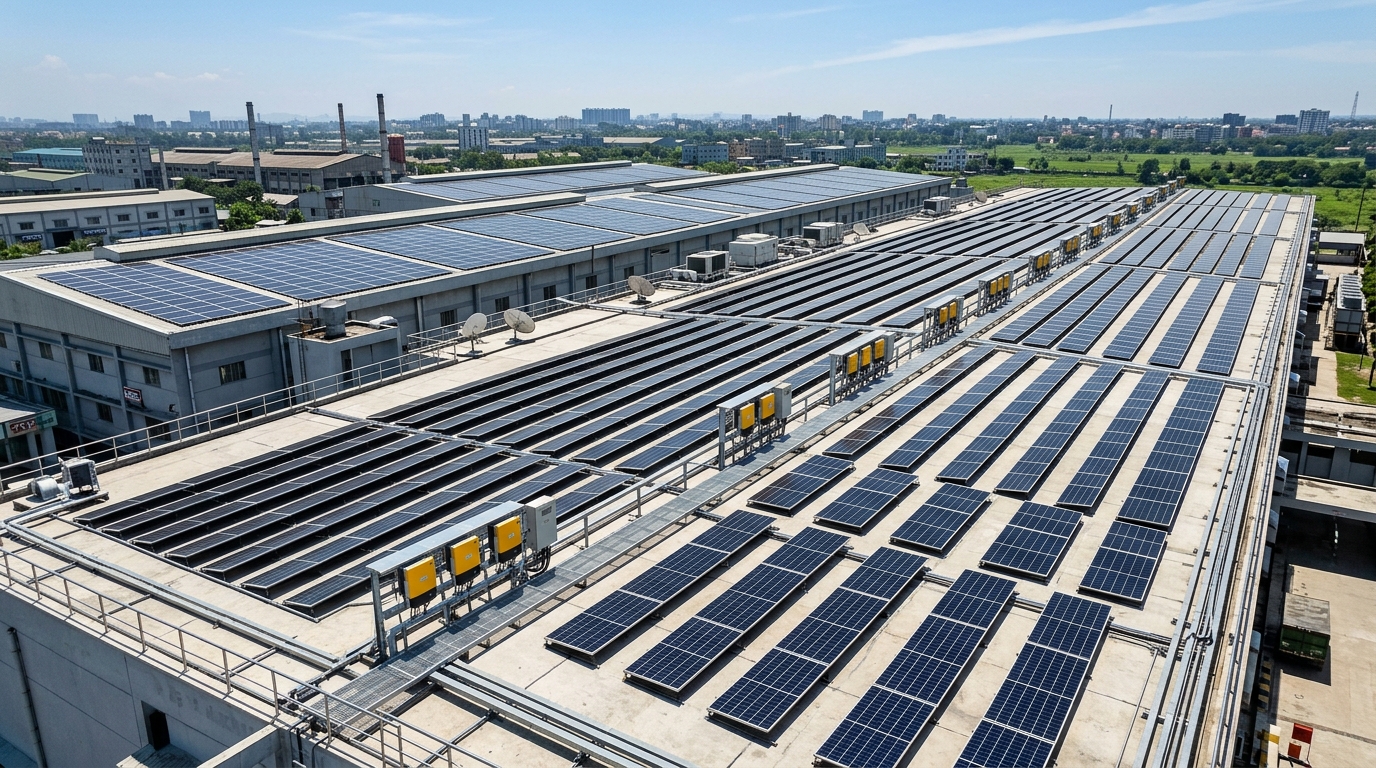
Industrial Solar Rooftop Installation Bangladesh
25 Yrs Linear PV Warranty
3–4 Yrs Average ROI Payback
< 10ms UPS Hybrid Transfer
Renewable Energy Standards & Bangladesh Grid Integration:
SREDA Net Metering Guidelines 2025 (Latest Revision) DPDC / DESCO / BPDB / BREB / WZPDCL IEC 61215 / IEC 61730 (PV Reliability) IEC 62116 (Anti-Islanding Protection) IEEE 1547 (Grid Interconnection) LEED Green Building Accreditation Points
Grid-Tied • Net Metering Ready ROI Payback: 3.2 to 4.5 Years

On-Grid Solar Power System

Zero-Battery Architecture for Maximum ROI & Daytime Bill Reduction

On-Grid (Grid-Tied) Solar Systems represent the most cost-effective and highest-ROI clean energy investment for commercial buildings, export factories, textile mills, and institutions. By synchronizing directly with your facility’s 415V three-phase or 230V single-phase switchgear, the system generates AC electricity that is consumed immediately by active machines, lighting, and HVAC chillers. Because there is no expensive battery bank required, initial capital expenditure is minimized, and maintenance overhead is practically zero.

Ideal Applications:

Garment & RMG factories, textile & spinning mills, pharmaceutical plants, commercial office towers, universities, shopping malls, cold storage facilities, and any establishment with heavy daytime electricity consumption.
On-Grid Industrial Solar Rooftop
Industrial Factory Rooftop On-Grid Array • Multi-MPPT Inverters
How On-Grid Solar Operates (Single Line Concept):
01

Solar PV Generation

High-efficiency Tier-1 Monocrystalline Bifacial panels capture sunlight and generate clean DC electricity on your rooftop or open ground.

02

String/Central Inversion

Industrial grid-tied inverters (Huawei / Sungrow / Growatt) convert DC electricity into synchronized 415V 3-Phase AC power with ultra-low harmonic distortion (THD < 3%).

03

Internal Self-Consumption

Solar power flows directly through your LT switchgear to feed active electrical loads first, drastically reducing utility electricity withdrawal.

04

Net Metering Grid Export

Any excess power generated during lunch hours, weekends, or low-load periods exports into the utility grid through an approved bi-directional net meter, banking energy credits.

Key Engineering & Commercial Benefits:

  • Lowest Levelized Cost of Electricity (LCOE) with rapid 3–4 year capital payback.
  • 100% compliant with SREDA Net Metering Guidelines 2018 for utility credit billing.
  • No ongoing battery replacement cost, acid leaks, or complex chemical storage hazards.
  • Certified Anti-Islanding Protection (IEC 62116 / IEEE 1547) for lineman safety during grid outages.
  • Dynamic Zero-Export / Zero-Feed-in control support if utility export is restricted or pending permit.
  • High-voltage DC combiner boxes equipped with Class II Surge Protection Devices (SPD) and DC isolators.
  • 24/7 cloud yield tracking via Wi-Fi/4G smartphone app and web SCADA monitoring portal.
  • Helps achieve LEED Gold / Platinum green factory certification points.
100% Autonomous • Deep-Cycle Storage Replaces Expensive Diesel Gensets

Off-Grid Solar Power System

Complete Energy Independence with High-Capacity Battery Storage

Off-Grid Solar Systems are engineered for installations situated beyond the reach of the national electrical grid or where utility power lines suffer from persistent chronic outages. The system captures solar energy during the day, channels power to active facility loads, and simultaneously charges high-density deep-cycle battery banks. During nighttime and heavily overcast monsoon days, the stored energy discharges through pure sine-wave off-grid inverters to provide uninterrupted electricity. An automated dry contact also connects to an auxiliary diesel generator for automatic fail-safe top-ups.

Ideal Applications:

Remote industrial sites, agricultural irrigation & agro-farms, poultry & fish hatcheries, islands, eco-resorts, telecom base transceiver stations (BTS), border security outposts, rural hospitals, and off-grid residential estates.

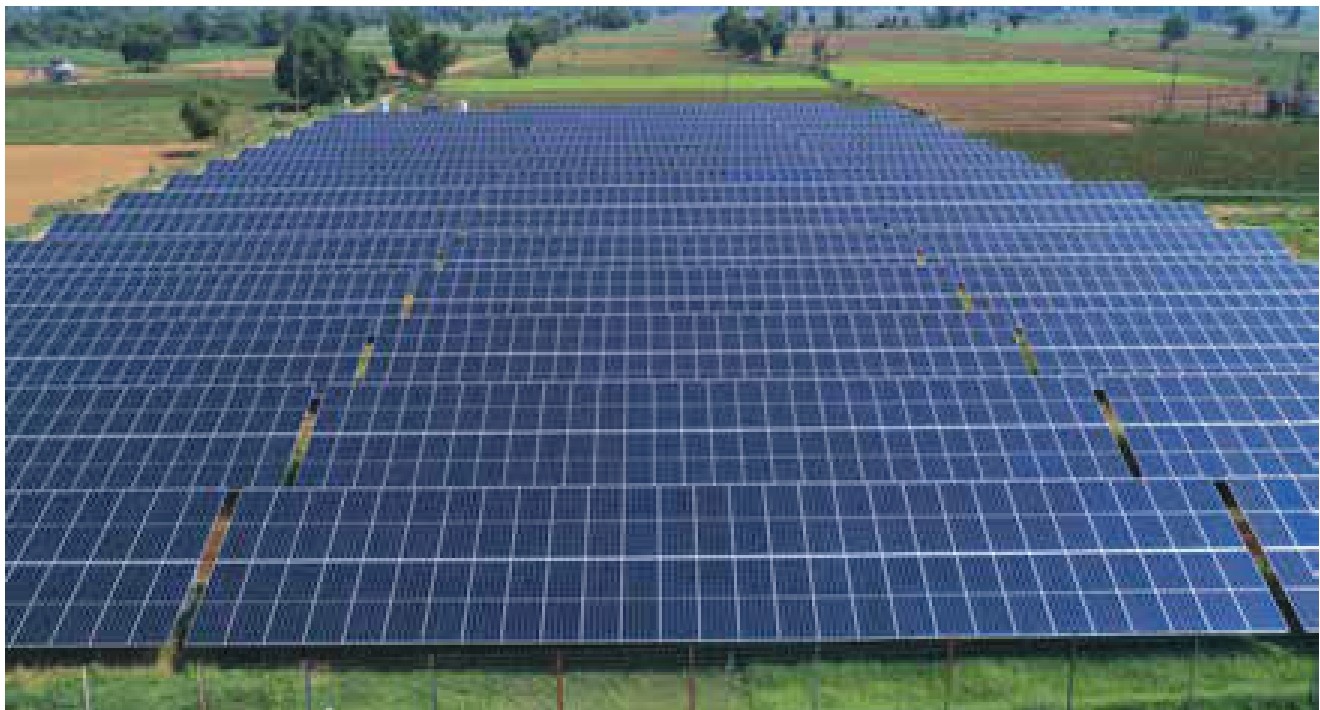
Off-Grid Ground Mount Solar Farm and Battery Storage
Brochure Photo: Standalone PV Array & Autonomous Energy Storage
How Off-Grid Solar Operates (Energy Storage Architecture):
01

Solar Harvesting

Solar PV panels absorb radiation and deliver variable DC power to the centralized control room.

02

MPPT Battery Regulation

Advanced MPPT (Maximum Power Point Tracking) charge controllers sweep the I-V curve to extract maximum wattage and regulate charging current into deep-cycle batteries.

03

Battery Energy Storage

High-cycle Lithium LiFePO4 (6,000+ cycles) or heavy Tubular Gel battery banks store energy safely with smart Battery Management System (BMS) balancing.

04

Pure Sine Wave Delivery

Off-grid industrial inverters convert stored DC into crisp, stable 230V/415V AC power with surge headroom to start heavy motors and inductive loads.

Key Engineering & Autonomy Benefits:

  • 100% total immunity from utility grid blackouts, load shedding, and billing rate hikes.
  • Replaces or drastically reduces diesel generator runtime, saving massive fuel and maintenance expenses.
  • Ultra-fast MPPT tracking efficiency (>99.5%) maximizes energy yield on cloudy days.
  • High-surge capacity (300% surge for 5 seconds) to start water pumps, air conditioners, and compressors.
  • Integrated Auto-Generator Start (AGS) contact to trigger backup diesel genset when batteries reach low DoD.
  • Smart multi-stage battery charging algorithms to extend battery lifespan up to 10–15 years.
  • Modular architecture allows scalable expansion of solar arrays and battery capacity over time.
  • Built-in LCD interface and remote mobile diagnostic telemetry.
Smart Grid + ESS Battery • <10ms UPS Transfer: < 10 milliseconds (Seamless no-break transfer)

Hybrid Solar Power System

The Ultimate Clean Energy Security: Net Metering Export + Instant Battery Backup

Hybrid Solar Power Systems represent the gold standard of modern electrical engineering. Equipped with bidirectional hybrid inverters and high-density Lithium Iron Phosphate (LiFePO4) energy storage, a hybrid system dynamically orchestrates four power sources: Solar PV, Battery Storage, National Utility Grid, and Auxiliary Generator. During ordinary daylight, it prioritizes self-consumption, recharges batteries, and exports surplus electricity for Net Metering credits. If the utility grid fails, the hybrid inverter switches seamlessly to battery supply in less than 10 milliseconds (<10ms true UPS grade), preventing machine stops, computer rebooting, and data loss.

Ideal Applications:

Continuous-process factories, automated CNC machinery, pharmaceutical production, IT data centers, hospitals & ICUs, luxury residences, bank headquarters, and critical infrastructure requiring guaranteed zero-flicker power.

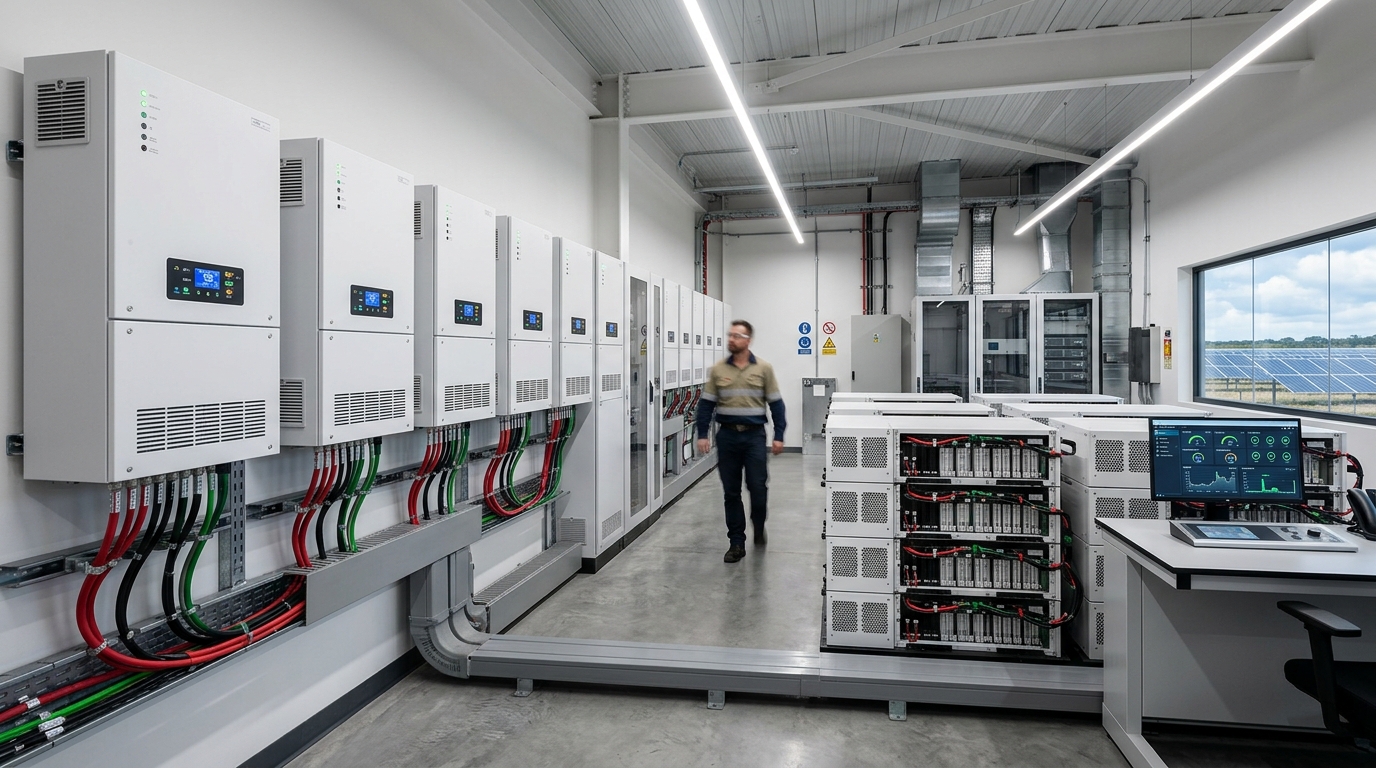
Commercial Hybrid Solar Li-ion ESS Control Room
Commercial Hybrid Control Room • High-Density LiFePO4 ESS Battery Cabinets
How Hybrid Solar Operates (Multi-Source Smart Synchronization):
01

Intelligent Priority Flow

Solar PV powers active facility equipment first; zero reliance on utility grid as long as sunlight is abundant.

02

Battery Top-Up & Optimization

Excess solar energy is directed into Lithium LiFePO4 battery modules until storage reaches 100% state-of-charge.

03

Net Metering Grid Export

Once batteries are fully charged, any subsequent surplus solar wattage is exported to the grid for monetary utility credits.

04

<10ms Instant UPS Transfer

Upon utility grid loss or brownouts, the hybrid inverter isolates from the grid and powers critical loads from batteries in <10ms with zero flicker.

Key Engineering & Energy Security Benefits:

  • Zero-downtime true UPS transfer (<10ms) safeguards sensitive servers, PLC automation, and lab equipment.
  • Peak Shaving capability: Programmable Time-of-Use (ToU) discharges battery during peak tariff hours to slash bills.
  • Enables Net Metering export to earn credits during sunshine hours while preserving full blackout protection.
  • Integrated Smart BMS (Battery Management System) with CAN/RS485 communication, cell-level balancing, and fire safety.
  • Dual AC output ports separating non-essential loads from essential mission-critical circuits.
  • Compact, aesthetic wall-mounted or rack-mounted modular Lithium cabinets requiring minimal floor area.
  • Multi-source synchronization: Solar + Battery + Grid + Generator seamlessly coordinated.
  • Comprehensive mobile app for real-time energy flow animation, remote firmware updates, and alarm alerts.

On-Grid vs. Off-Grid vs. Hybrid Solar Systems

Compare key operational capabilities, battery requirements, grid integration parameters, and financial paybacks to select the optimum solar architecture for your infrastructure.

Engineering Parameter On-Grid On-Grid (Grid-Tied) Off-Grid Off-Grid (Standalone) Hybrid Hybrid (Grid + ESS)
Utility Grid Connection Mandatory (Must be synchronized with grid) Not Required (Completely standalone) Supported (Synchronized with grid + battery)
Battery Bank Required? No (Zero battery overhead or cost) Yes (Essential for 24/7 power supply) Yes (Lithium LiFePO4 Energy Storage ESS)
Operation During Blackout / Outage Shuts down immediately (Anti-islanding safety) Runs continuously (Not affected by grid) Instant transfer in < 10ms (True UPS continuous)
Net Metering Export Credits Yes (Full bi-directional grid export) No (Cannot export to utility grid) Yes (Exports excess power after battery is full)
Initial Capital Expenditure (CapEx) Lowest (Most economical per kWp) Moderate to High (Battery bank adds cost) Medium to High (High-tech inverter & Li-ion)
Typical Payback Period (ROI) 3.2 – 4.5 Years Replaces high diesel fuel costs in 2–3 yrs 4.0 – 5.5 Years
Maintenance Requirement Minimal (Periodic PV panel washing only) Moderate (Battery health checks & BMS oversight) Low (BMS is fully automated with smart diagnostics)
Peak Shaving / Time-of-Use Daytime solar peak reduction only Continuous battery energy utilization Intelligent programmable peak tariff shaving
Typical Applications Factories, RMG, Commercial buildings, Schools Farms, Remote Plants, Telecom Towers, Islands Hospitals, Data Centers, Critical Process Units, VIP
Latest Regulatory Framework: 2025 Revision Net Metering Guidelines – 2025 (Latest Revision by Ministry of Power, Energy & Mineral Resources)

Latest SREDA Net Metering Guidelines – 2025

Promulgated by the Ministry of Power, Energy and Mineral Resources (MPEMR) and SREDA, the Net Metering Guidelines – 2025 revolutionize rooftop solar across Bangladesh. Key historic restrictions have been lifted: the solar sizing cap is elevated to 100% of sanctioned load, and single-phase residential and commercial consumers are now legally eligible to export solar power.

01
100% Sanctioned Load Sizing (New 2025):

Up to 100% of the consumer’s sanctioned electrical load (Increased from previous 70% cap in 2018 guidelines).

02
Single-Phase Inclusion (New 2025):

Single-Phase connections are now FULLY ELIGIBLE (Residential & small commercial consumers can now connect under 2025 rules).

03
Power Quality & THD Standards:

Total Harmonic Distortion (THD) < 3%; Power Factor maintained strictly between 0.95 lead to 0.95 lag.

04
Settlement & Energy Banking:

Multi-month quarterly energy banking rollover; accumulated surplus credits offset monthly billing tariffs.

Authorized Utility Interconnection Partners:

  • DPDC (Dhaka Power Distribution)
  • DESCO (Dhaka Electric Supply)
  • BPDB (Bangladesh Power Development Board)
  • BREB / PBS (Rural Electrification)
  • WZPDCL (West Zone Power)
  • NESCO (Northern Electricity Supply)
Official 2025 Policy Document

Access the complete 50-page official "নেট মিটারিং নির্দেশিকা-২০২৫" (SREDA Net Metering Guidelines 2025) published by the Ministry of Power, Energy & Mineral Resources.

Inquire & Download 2025 SREDA Guidelines (PDF) →

Specialized Solar Divisions

Direct from Voltcore’s official technical brochure, our multidisciplinary team executes clean energy projects spanning residential micro-kits to utility-scale megawatt grid infrastructure.

Solution 01 SREDA Compliant

Net Metering Solar System

Connect your rooftop solar array directly to the national grid to export excess electricity and drastically reduce utility bills under government Net-Metering guidelines.

Explore Net Metering →
Solution 02 Residential Kits

Solar Home System (SHS / SHM)

Standalone, reliable solar electricity kits designed for residential homes, duplex villas, and off-grid rural communities requiring clean daily lighting and fan power.

Explore Home Systems →
Solution 03 Commercial & Industrial

On-Grid Solar Power System

Grid-tied commercial and industrial solar installations engineered for maximum daytime energy displacement without costly battery storage overhead.

Explore On-Grid EPC →
Solution 04 Remote Storage

Off-Grid Solar Power System

Complete battery-backed independent solar systems providing uninterrupted 24/7 power without any reliance on national grid infrastructure.

Explore Off-Grid EPC →
Solution 05 Smart ESS + Grid

Hybrid Solar Power Solution

Intelligent systems combining solar panels, Lithium/Gel battery storage, and grid synchronization for absolute 24/7 power security and zero outages.

Explore Hybrid EPC →
Solution 06 Megawatt Scale EPC

Utility Grid Solar System

Megawatt-scale ground-mounted utility solar plants, IPP solar parks, and commercial mini-grid solar engineering, procurement, construction, and 33kV/11kV interconnection.

Inquire Utility EPC →

6-Phase Turnkey Solar EPC Engineering Process

From initial drone roof mapping through to final bi-directional net meter energization, our in-house electrical and structural engineers guarantee seamless execution.

Phase 01

Site Survey & 3D Shadow Analysis

Drone rooftop topographical mapping, structural integrity assessment, and HelioScope / PVsyst 3D solar irradiance & shading simulation.

Phase 02

SLD Design & Engineering

Complete electrical Single Line Diagram (SLD), cable loss calculations, switchgear protection coordination, and wind load structural calculations (up to 180 km/h).

Phase 03

Utility & SREDA Permitting

Voltcore handles all official paperwork, technical documentation, and approvals from DPDC, DESCO, BPDB, BREB, and SREDA for Net Metering interconnection.

Phase 04

Tier-1 Procurement & Fabrication

Import of genuine Tier-1 PV modules and inverters, paired with Voltcore factory-fabricated anodized aluminium and hot-dip galvanized mounting structures.

Phase 05

Mechanical & Electrical Erection

Non-penetrative or chemical anchor mounting, UV-resistant DC cabling, DCDB/ACDB installation, deep earthing pits (< 1 Ohm), and lightning protection mast setup.

Phase 06

Testing, Commissioning & Net Metering

I-V curve testing, insulation resistance & thermographic scanning, joint utility inspection, bi-directional net meter installation, and official grid energization.

Direct Engineering Consultation

Request Solar System Engineering Proposal & BoQ

Submit your facility details below. Our technical renewable engineering team will conduct a preliminary assessment and provide an optimized Single Line Diagram (SLD), BoQ, and Net Metering feasibility study.

Need immediate technical advice? Call Our Renewable Engineering Desk: +88 013 03 11 66 88